Where to stay in Back Bay, Boston: what the neighbourhood feels like street by street, which hotels sit on which block, what a night really costs once taxes and parking are added, and who Back Bay suits best.
Best Hotels in Back Bay, Boston: where to stay on the city's most walkable grid.
Our hotel picks in Back Bay
How this shortlist is put together- The order is not a ranking. There is no first and no last.
- Every bracket is represented, from the cheapest bed in the area to its most expensive room.
- The selection is our editors’ choice. No algorithm, no guest-vote aggregation.
- We do not sell placement on this page.
- We keep one to two properties per group or brand.
- Links open the property’s page on Booking.com so you can compare live rates and dates.
Mandarin Oriental, Boston
5-star luxury · Best for: A splurge stay on Boylston Street
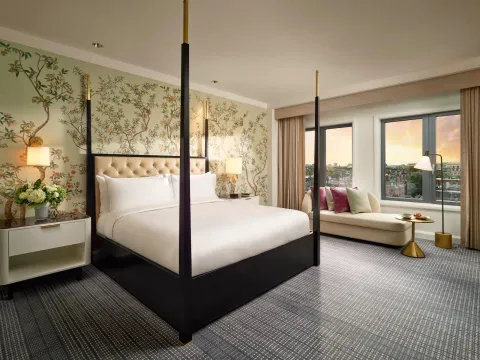
What makes the difference? Rooms are among the largest in the city and the spa is the reason many guests book here rather than a rival address.
See rates and availability for Mandarin Oriental, Boston →
The Newbury Boston
5-star luxury · Best for: Public Garden views
What makes the difference? It sits at the corner of Newbury Street and the Public Garden, so you get the shopping street and the park from the same front door.
See rates and availability for The Newbury Boston →
Fairmont Copley Plaza
Grand historic · Best for: Old-Boston character on Copley Square
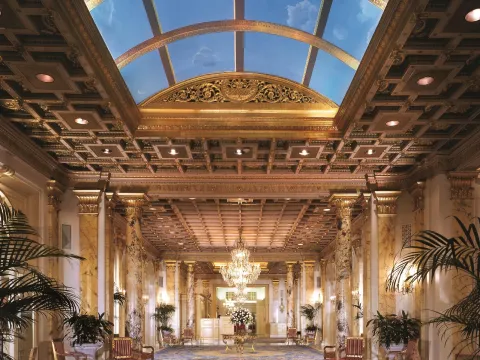
What makes the difference? A 1912 grand hotel facing Copley Square, with the ballroom-and-lobby scale that newer Back Bay hotels cannot reproduce.
See rates and availability for Fairmont Copley Plaza →
The Eliot Hotel
Boutique, opened 1925 · Best for: Quiet suites at the Fenway end
What makes the difference? Mostly suites rather than rooms, on the calmer western edge of Back Bay near Massachusetts Avenue.
See rates and availability for The Eliot Hotel →
The Colonnade Hotel
Upscale independent · Best for: Staying opposite the Prudential Center
What makes the difference? Directly across from the Prudential Center and a few blocks from both Copley Square and Newbury Street.
See rates and availability for The Colonnade Hotel →
The Lenox Hotel
Upscale independent · Best for: Walking to everything in Back Bay
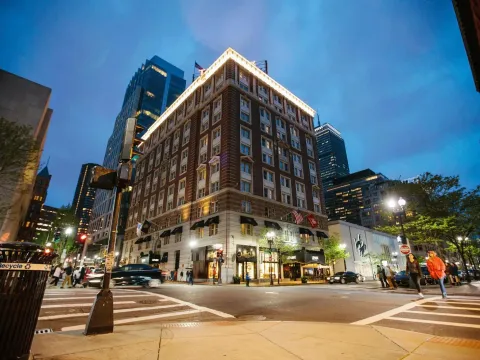
What makes the difference? A family-run landmark on Boylston Street, within a few minutes of Copley Square, Newbury Street and Back Bay station.
See rates and availability for The Lenox Hotel →
Our neighborhood rating — Back Bay
Location & sightseeing★★★★½ 4.5/5
Dining & nightlife★★★★½ 4.5/5
Calm & local character★★★½☆ 3.5/5
Hotel value for money★★½☆☆ 2.5/5
The editorial judgment of our newsroom — not user votes, not an algorithm. How we rate neighborhoods →
Why Back Bay is a smart place to stay in Boston
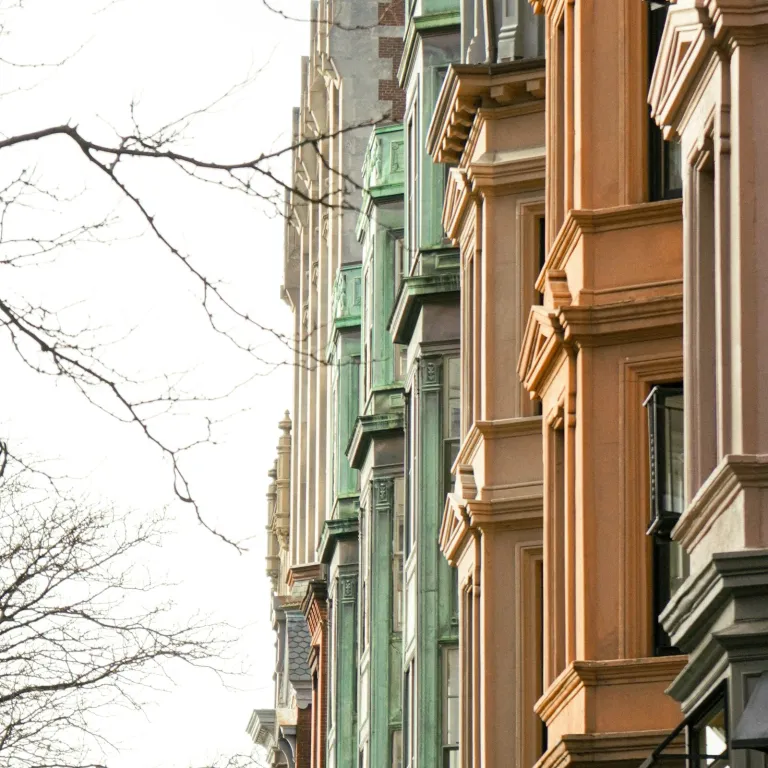
Back Bay is the neighbourhood most first-time visitors picture when they picture Boston: wide boulevards, brownstone rows, and a grid you can read at a glance. It was built on filled land in the nineteenth century, which is why it is the one part of central Boston laid out in straight, alphabetical cross streets — Arlington, Berkeley, Clarendon, Dartmouth, Exeter, Fairfield, Gloucester, Hereford. After a few hours of Boston's colonial tangle, that alone is a reason to sleep here.
For anyone weighing where to book a Boston hotel, Back Bay sits between the working downtown core and the residential calm of Beacon Hill. You get the density of shops, restaurants and hotel rooms that a downtown offers, without the after-six emptiness that office districts fall into. If you are still deciding, our Boston neighbourhood chooser asks seven questions and gives you a shortlist.
Atmosphere, streets, and what it feels like to stay here
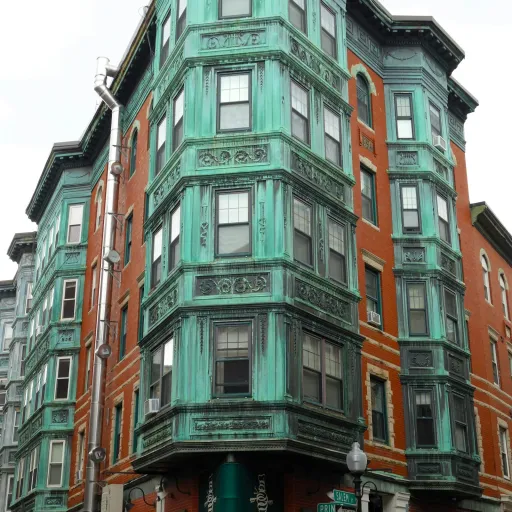
Three streets set the tone. Newbury Street is the shopping spine, eight blocks of boutiques, galleries and basement-level cafés in converted townhouses. Boylston Street, one block south, is the busier commercial artery, carrying the Boston Public Library, the Prudential Center and a long run of restaurants. Commonwealth Avenue, one block north, is the quiet one: a tree-lined mall with benches and statues running the length of the neighbourhood, and the closest thing Boston has to a Parisian boulevard.
Copley Square anchors the eastern end, with Trinity Church facing the Boston Public Library across an open plaza. The Charles River Esplanade runs along the northern edge, which matters more than it sounds: it means a hotel in Back Bay puts a riverside path within a short walk, something almost no other central Boston neighbourhood can offer.
What to expect from hotels in Back Bay
Back Bay carries more of Boston's landmark hotels than any other neighbourhood, and the range inside it is unusually wide. At the historic end sit the Fairmont Copley Plaza, opened in 1912 facing Copley Square and still keeping a resident canine ambassador, and the Copley Square Hotel, which dates to 1891 and whose basement once housed the Storyville jazz club. The Lenox Hotel, open since 1900 at Boylston and Exeter, is still run independently rather than under a chain flag. The Newbury Boston occupies the 1927 building at 1 Newbury Street that opened as the first Ritz-Carlton in the United States.
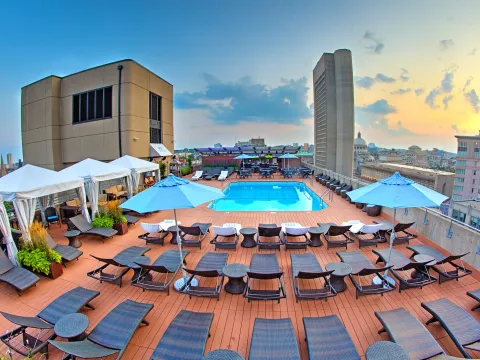
At the contemporary end, Four Seasons Hotel One Dalton Street occupies floors 8 to 21 of a 724-foot, 61-storey tower, and Raffles Boston at 40 Trinity Place is the first Raffles in North America, built around a three-storey sky lobby. Mandarin Oriental, Boston is built into the Prudential Center complex with direct indoor access to the shops. The Colonnade Hotel on Huntington Avenue has a twelfth-floor deck billed as Boston's only rooftop pool. Smaller and quieter options exist too: The Eliot Hotel, open since 1925 on Commonwealth Avenue, is mostly two-room suites, and the Inn at St. Botolph, on the Back Bay and South End line, is all-suite with kitchenettes and keypad self check-in rather than a staffed desk.
All of these appear, with the rest of the city, in our fifty-strong list of the hotels that define Boston, where every property was checked against its own site.
What a night in Back Bay actually costs
Two things decide the bill in Boston, and only one of them is the room rate. The other is the month. Our Boston Hotel Price Index tracks a fixed basket — the market's average nightly rate, plus the 14.95 % of statutory lodging taxes that Boston stacks on top of it (5.7 % state, 6.5 % city, 2.75 % convention centre), plus one 24-hour downtown garage space. On that basket, January 2025 came to $261.76 and October 2025 to $482.24: the same basket, 84 % more expensive, three seasons apart.
Across the year the index shows $301.97 advertised turning into $385.11 actually paid, a gap of 27.5 %. Back Bay is not a discount neighbourhood, but it is a transparent one: the tax rate is citywide, and the parking premium applies wherever you sleep downtown. If you want to model your own trip rather than read an average, the Boston trip budget calculator lets you set every line yourself.
The seasonal swing is not a rounding error either. Citywide occupancy runs at 87.8 % in October against 54.3 % in January, according to the figures collected in our Boston travel data room. Booking a Back Bay room in autumn without booking early is the most expensive mistake a visitor can make here, and it is the reason we wrote a separate guide to visiting Boston in the fall.
Location advantages: walking, transit, and access
Back Bay is the best-connected neighbourhood in central Boston for a visitor who does not want to think about transport. The Green Line runs beneath Boylston Street with stations at Arlington, Copley, Hynes Convention Center and Prudential. Back Bay station, on the southern edge, carries the Orange Line and the commuter rail, and is the arrival point for Amtrak trains from New York and Providence — which makes this the obvious base if you are reaching Boston by train rather than through Logan.
On foot, the Public Garden and Boston Common sit directly off the eastern end of Commonwealth Avenue, and from there the rest of historic Boston opens up. Beacon Hill is across the Garden; the downtown financial core is beyond it. Fenway Park is a straight walk west along Boylston. If you want to build the days rather than improvise them, our Boston itinerary builder plans them around the base you pick.
Who Back Bay suits best, and who should look elsewhere
Back Bay suits first-time visitors, couples, shoppers, train arrivals and anyone travelling with people who tire easily: the flat grid and short blocks make it the least demanding central neighbourhood to walk. It also suits business travellers attending events at the Hynes Convention Center, which is inside the neighbourhood.
It suits you less if you are here for the harbour, the ferries or the aquarium — the Boston waterfront puts all three at your door. It suits you less if you want the office-district efficiency and the cheapest weekend rates, which tend to sit in downtown Boston. And it suits you less if quiet is the priority: Newbury and Boylston are busy until late, and rooms facing them can hear it.
How to choose the right Back Bay hotel for your stay
Work down the neighbourhood rather than down a price list. Decide first which of the three streets you want to wake up on: Commonwealth for quiet, Newbury for shopping, Boylston for everything within reach and some noise. Then decide whether you want a building with a history or a tower with a view, because Back Bay genuinely offers both within a few blocks of each other. Only then compare rates, and compare them for the month you are actually travelling — an October quote and a January quote are not the same product.
Two practical checks before you book. Ask whether parking is valet-only, because in Back Bay it usually is and the nightly charge is real money. And check which side of the building your room faces: the difference between a Commonwealth Avenue side and a Boylston Street side is the difference between two neighbourhoods.
All our neighbourhood guides are collected on our Boston where-to-stay index, and the working rules behind these pages are set out in how we work.
Frequently asked questions about staying in Back Bay
Is Back Bay a good area to stay in Boston?
Yes, and it is the safest default for a first visit. It has the widest range of hotels in central Boston, a flat and legible street grid, direct Green Line and Orange Line access, and it stays busy in the evening rather than emptying out like an office district.
Is Back Bay expensive compared with the rest of Boston?
It sits at the upper end, but the citywide figures matter more than the neighbourhood. Boston adds 14.95 % in statutory lodging taxes wherever you sleep, and our Boston Hotel Price Index recorded the same fixed basket moving from $261.76 in January 2025 to $482.24 in October 2025. Month of travel moves the bill further than neighbourhood does.
Is Back Bay or Beacon Hill better for a first stay?
Back Bay if you want choice, shops, restaurants and transit. Beacon Hill if you want quiet and period streets and are happy with a much smaller set of hotels. The two are a fifteen-minute walk apart across the Public Garden, so neither cuts you off from the other.
Most of central Boston, yes. The Public Garden, Boston Common, Beacon Hill, the South End and Fenway Park are all walkable from Back Bay. The harbour, the North End and Charlestown are better reached by the T or on the ferries.
Which Back Bay hotels are the historic ones?
The Fairmont Copley Plaza opened in 1912, the Copley Square Hotel dates to 1891, The Lenox opened in 1900, The Eliot in 1925, and The Newbury Boston occupies the 1927 building that housed the first Ritz-Carlton in the United States.
Other Boston neighbourhoods
Not sure Back Bay is the right base for your trip? These guides cover the neighbourhoods travellers most often weigh against it.
Compare Boston neighbourhoods