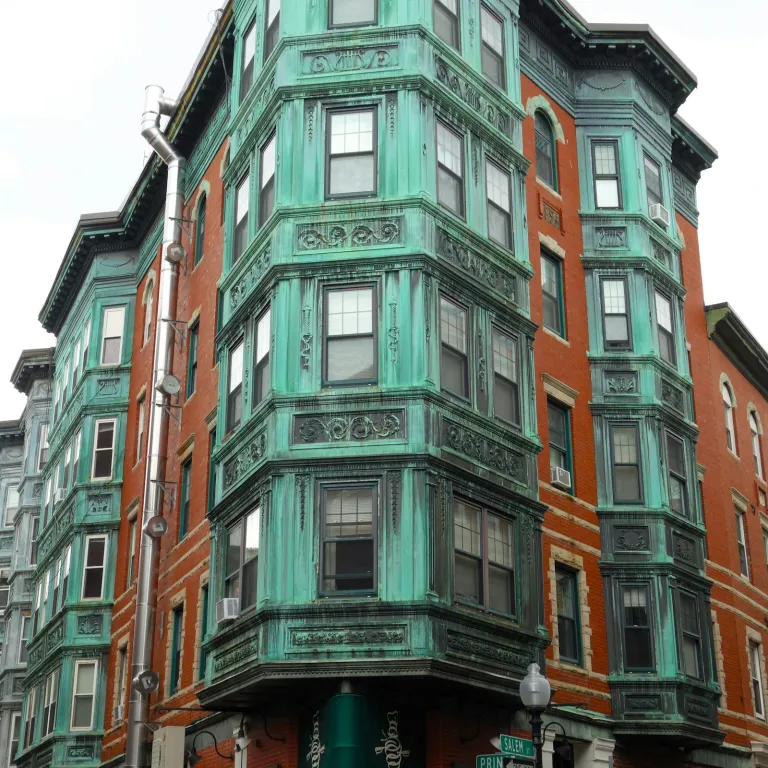
Why choose Allston–Brighton for your Boston stay
Cross the Charles River at sunset and the mood shifts. On the Allston–Brighton side, Boston feels younger, more local, less choreographed. It is still very much the United States, but with a campus edge and a lived-in rhythm that many repeat visitors prefer.
Our hotel picks in Allston/Brighton
- The order is not a ranking. There is no first and no last.
- Every bracket is represented, from the cheapest bed in the area to its most expensive room.
- The selection is our editors’ choice. No algorithm, no guest-vote aggregation.
- We do not sell placement on this page.
- We keep one to two properties per group or brand.
- Links open the property’s page on Booking.com so you can compare live rates and dates.
| Hotel | Standing | Best for | Book |
|---|---|---|---|
| Studio Allston Hotel | 3.5-star | An art-led, well-priced base | Check availability |
| DoubleTree Suites by Hilton Hotel Boston - Cambridge | 3.5-star | Suites and an indoor pool | Check availability |
| The Atlas Hotel | Independent | A quieter stay near JFK Park | Check availability |
| Homewood Suites by Hilton Boston Brookline-Longwood Medical | Extended stay | Longer stays with a kitchen | Check availability |
| The Farrington Inn | Guesthouse | The cheapest room in the area | Check availability |
Studio Allston Hotel
3.5-star · Best for: An art-led, well-priced base
What makes the difference? The most characterful hotel in the neighbourhood, with a restaurant and a 24-hour fitness centre.
See rates and availability for Studio Allston Hotel →
DoubleTree Suites by Hilton Hotel Boston - Cambridge
3.5-star · Best for: Suites and an indoor pool
What makes the difference? All-suite layout with an indoor pool, useful for families staying several nights.
See rates and availability for DoubleTree Suites by Hilton Hotel Boston - Cambridge →
The Atlas Hotel
Independent · Best for: A quieter stay near JFK Park
What makes the difference? Terrace, restaurant and private parking, ten minutes on foot from John F. Kennedy Park.
See rates and availability for The Atlas Hotel →
Homewood Suites by Hilton Boston Brookline-Longwood Medical
Extended stay · Best for: Longer stays with a kitchen
What makes the difference? Kitchens in every unit, which changes the maths on stays over three or four nights.
See rates and availability for Homewood Suites by Hilton Boston Brookline-Longwood Medical →
The Farrington Inn
Guesthouse · Best for: The cheapest room in the area
What makes the difference? A small guesthouse rather than a hotel, a short drive from the Harvard Peabody Museum.
The editorial judgment of our newsroom — not user votes, not an algorithm. How we rate neighborhoods →
Travelers considering hotels in Allston–Brighton are usually weighing one question: trade a central postcode for space, calm, and easier parking, or stay tight to Back Bay and Beacon Hill. For many guests, Allston–Brighton is the better answer, especially if you value access to Harvard, Boston College, or the Longwood Medical Area more than a postcard view of Faneuil Hall. The location along Soldiers Field Road and Commonwealth Avenue gives quick road access west toward Cambridge, Brookline, and the rest of the Boston metropolitan area.
Expect a mix of classic Boston hotels and more design-forward properties, often with larger rooms than you would find downtown. Some stays feel almost like an apt in Boston, with studio-style layouts and small kitchen corners. Others lean into the traditional United States roadside hotel model, with straightforward rooms, on-site parking, and easy check-in after a late flight.
Noise levels, street life, and the feel of the immediate block can change within a minute walk. That is why you should always check the exact address on a Boston map or satellite view before you book. In Allston–Brighton, the right corner makes all the difference between a quiet residential stay and a night above a student bar.
| Area | Best for | Typical vibe |
|---|---|---|
| Allston | Nightlife, food, quick access to Cambridge | Lively, student-heavy, late-night energy |
| Brighton | Families, longer stays, Boston College visits | Quieter, residential, more low-key |
Understanding the Allston vs Brighton split
Stand at Packard’s Corner on Commonwealth Avenue and you can feel the seam between Allston and Brighton. One side hums with students and late-night eateries; the other drifts quickly into leafy side streets and triple-decker houses.
Allston proper suits travelers who like energy. Here, an Allston hotel located near Harvard Avenue or Brighton Avenue puts you within minutes walk of Korean barbecue, live music basements, and casual cafés that open late. It is a place to stay if you want to step out of your room and into a crowd, especially on weekends when Boston’s student population spills onto the sidewalks.
Brighton, stretching toward Chestnut Hill Avenue and the Reservoir, is quieter and more residential. Brighton Boston hotels in this part of the city often attract guests visiting Boston College, families coming for graduations, or travelers who prefer a calmer base with easier street parking. The atmosphere is softer: joggers along the Chestnut Hill Reservoir, dog walkers on Englewood Avenue, and fewer sirens at night.
When you compare hotels Boston side by side, think in terms of this split. Allston is better for nightlife, quick access to Cambridge, and a more experimental food scene. Brighton is stronger for longer stays, early nights, and those who want their Boston hotel to feel like a discreet city retreat rather than a campus-adjacent crash pad.
What to expect from rooms, layouts, and comfort
Room size in Allston–Brighton tends to be generous by Boston standards. Even standard rooms often feel closer to a compact apartment than a tight downtown studio, with space to open a large suitcase without choreography.
You will find a spectrum of layouts. Some properties offer true studio-style rooms with a small sitting area, a desk that actually works for a laptop, and sometimes a kitchenette corner that makes a short stay feel free of restaurant dependency. Others keep to a classic hotel room format: bed, armchair, and a simple wardrobe, designed for guests who treat the room as a place to sleep rather than to linger.
Design varies sharply from property to property. Certain addresses lean into bold color, local art, and a more playful interpretation of a Boston hotel, clearly inspired by the creative community around Allston’s music venues and galleries. Others are deliberately neutral, with beige tones and practical furnishings that will not distract you from a day of meetings or campus visits.
Before you book, check whether the room category you are considering faces the Charles River, a courtyard, or a busy avenue. A river-facing room along Soldiers Field Road can feel surprisingly tranquil, especially at sunrise. A room directly above Brighton Avenue, by contrast, may carry the echo of late-night traffic and bar crowds, even with good reviews mentioning comfort.
Access, mobility, and getting around the city
From Allston–Brighton, the rest of Boston is closer than it looks on a static city map. The Green Line along Commonwealth Avenue, the 57 bus corridor, and the bridges over to Cambridge turn what seems peripheral into a practical base.
Guests who plan to rely on public transport should look carefully at the nearest Green Line stop: Packard’s Corner, Harvard Avenue, and Washington Street each change your daily rhythm. Being within a five minutes walk of a station can matter more than shaving a few dollars off the price per night. For early-morning hospital shifts or campus commitments, that short walk in winter temperatures is not a detail.
Drivers will appreciate that Allston–Brighton is one of the few parts of Boston where on-site parking is still relatively common. Many properties include a parking option on the premises or immediately adjacent, which is rare closer to the historic center. If you are planning a road trip through the United States, this can make the neighborhood a strategic first or last stop.
Accessibility deserves a careful check. Some hotels in the area offer wheelchair access with step-free entrances, elevators, and adapted rooms, while older converted properties may have limitations. Always verify the exact accessibility features of your chosen place to stay rather than assuming that all Boston hotels meet the same standard.
Matching the neighborhood to your travel profile
Business travelers often underestimate Allston–Brighton. Yet for meetings in Cambridge, visits to Boston University’s riverside campus, or work near the Mass Pike corridor, a hotel here can cut commuting time dramatically compared with a downtown address.
Leisure guests who want a more local Boston will also feel at home. From a hotel located near Harvard Avenue, you can walk to the Charles River in under ten minutes, follow the path toward the Eliot Bridge, and be in Cambridge without ever opening a rideshare app. The area’s casual restaurants, from noodle shops to vegan diners, make it easy to stay free of repetitive hotel menus.
Families and longer-stay visitors should look for properties that offer larger rooms, connecting options, or studio-style layouts that echo an apt in Boston rather than a transient stopover. These configurations work well for college drop-offs, medical visits, or extended work assignments where unpacking properly matters. Pet friendly policies, when available, can also be a deciding factor for road-tripping families crossing the Boston corridor along Interstate 90.
If your priority is classic sightseeing around the Freedom Trail, the North End, and the Seaport, Allston–Brighton is not the most obvious base. It works best for travelers who are comfortable trading a few extra minutes on the Green Line for more space, easier parking, and a neighborhood that feels lived in rather than curated for visitors.
How to choose the right Allston–Brighton hotel
Start with the map, not the marketing. Pin your key destinations — campus, hospital, office, or concert venue — then look for hotels within a realistic minute walk or a single transit hop. In Boston, those few blocks can mean the difference between a pleasant stroll and a daily negotiation with traffic.
Next, decide what you value most inside the property. If you want a more residential feel, prioritize hotels that offer studio-style rooms or apartment-like layouts, sometimes described as an apt Boston configuration. If you prefer a classic hotel Boston experience with a defined lobby, bar, and clear separation between public and private spaces, filter accordingly.
Pay attention to how past guests described the location and noise levels rather than focusing only on general reviews about décor. Comments about thin walls, late-night street noise, or unexpectedly quiet rooms facing the rear courtyard are often more useful than broad ratings. Look also for mentions of wheelchair access, lift reliability, and the ease of moving luggage from parking to the room.
Finally, consider the overall character you want from your stay. Some Allston hotel options lean into color, art, and a playful mood that suits creative travelers and weekend stays. Others feel more restrained and businesslike, better for early nights and focused work. In a city where central hotels Boston side can feel interchangeable, Allston–Brighton still offers distinct personalities — you simply need to match them to your own.
Is Allston–Brighton a good area to stay in Boston?
Allston–Brighton is a strong choice if you value space, easier parking, and quick access to universities and Cambridge. It is less ideal for first-time visitors focused solely on downtown sightseeing.
How far is Allston–Brighton from central Boston attractions?
From most Allston–Brighton hotels, expect around 20 to 30 minutes by Green Line or bus to reach Back Bay or the Boston Common. Driving times vary with traffic, especially at rush hour.
Is Allston–Brighton suitable for families?
Yes, especially on the Brighton side, which is more residential and calm. Larger rooms, some studio-style layouts, and relatively easy parking make it practical for family visits and college-related trips.
Can I get around Allston–Brighton without a car?
Yes. The Green Line, several bus routes, and walkable corridors along Commonwealth Avenue and Harvard Avenue make it feasible to stay without a car, particularly if your plans center on nearby campuses.
What should I check before booking a hotel in Allston–Brighton?
Verify the exact location, nearest transit stop, parking options, and any accessibility needs such as wheelchair access. Also review recent comments about noise levels and room orientation within the property.
Other Boston neighbourhoods
Not sure Allston-Brighton is the right base for your trip? These guides cover the neighbourhoods travellers most often weigh against it.