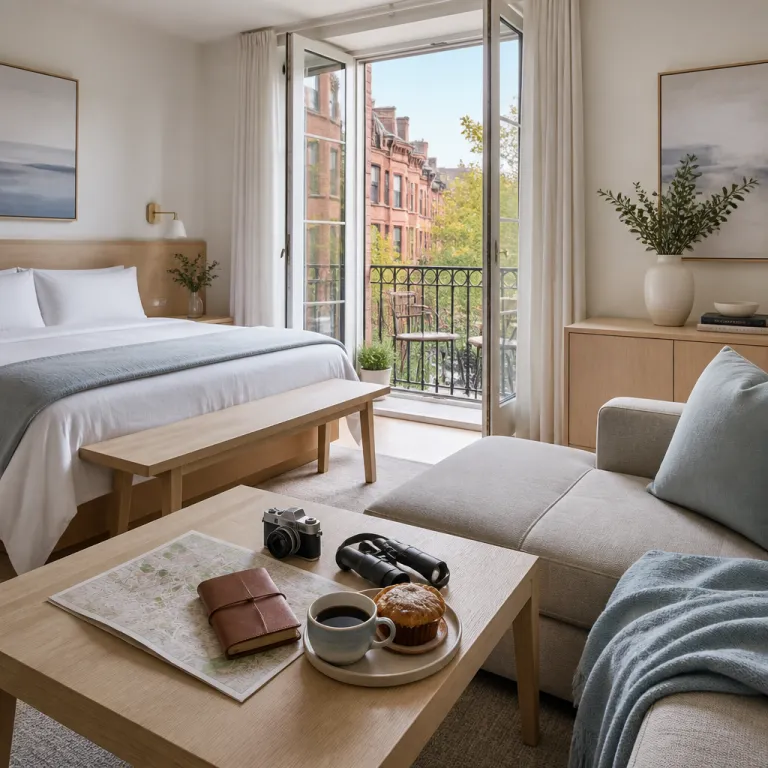
South End Boston luxury hotels in a historic neighborhood setting
South End Boston as a refined base for luxury stays
South End Boston offers a rare blend of historic elegance and modern comfort for travelers seeking premium hotels. In this compact neighborhood the city reveals Victorian brownstones, tree lined street views, and a calm residential atmosphere that still sits close to the center. Many luxury guests choose this south of downtown location because it balances access to wider Boston attractions with a quieter, more local community feel.
The neighborhood forms part of a landmark historic district that was built on reclaimed bay land, and its roughly 300 acre area is now protected for its architecture. That heritage gives high end hotels and serviced apartments a distinctive backdrop, with cast iron railings, bow front façades, and pocket parks that soften the urban grid. When you book a premium stay here you sleep in a living museum of Boston Massachusetts history while remaining minutes from the Financial District, Back Bay, and Beacon Hill by taxi or tram.
For travelers comparing locations across greater Boston, the South End stands out as a real residential community rather than a purely commercial zone. You are still in the heart of the city, yet the rhythm on Washington Street or Tremont Street feels more like a neighborhood main street than a tourist corridor. That sense of community is reinforced by local churches, a strong LGBTQ+ presence, and family friendly parks where South End residents mix with visitors from South Boston, Jamaica Plain, and other nearby areas.
Choosing the right luxury hotel in the South End
Selecting the best premium hotel in South End Boston starts with clarifying how you want to experience the city. Some travelers prioritize proximity to Back Bay and the Seaport, while others value quiet residential streets and easy access to local restaurants Boston is famous for. If you plan to split your time between the South End and the waterfront, pairing a South End stay with a night in a Seaport property can work well, and resources such as this guide to Seaport Boston waterfront stays for luxury travelers help you compare options.
Within the neighborhood you will find luxury hotels, design forward apartments, and serviced residences set along avenues that connect directly to the city center. Properties near Tremont Street or Washington Street place you within a short walk of the best restaurants and galleries, while quieter side streets closer to the Southwest Corridor Park offer a more secluded feel. When evaluating real estate style hotel suites, look for floor plans that echo classic Boston South brownstone layouts, with high ceilings, tall windows, and views toward a park locals actually use.
Parking and access matter as well, especially for guests touring New England by car across the United States. South End Boston sits just south of Back Bay Station, which links quickly to Logan Airport and to Amtrak services toward New York, so you can arrive without driving through the most congested downtown streets. If you do bring a car, check whether your chosen Boston hotel offers valet service or secure on site parking, since many historic streets were not designed for modern traffic volumes.
Hidden cultural gems near your South End hotel
Staying in South End Boston places you within walking distance of cultural experiences that many visitors miss when they focus only on downtown. Small galleries tucked along Tremont Street and Washington Street showcase local artists, while performance spaces in converted churches and former industrial buildings highlight the area’s adaptive reuse. This is where the broader Boston story of gentrification, creativity, and community activism becomes visible block by block.
Several parks thread through the neighborhood, creating a green corridor that links the South End to other parts of greater Boston. From your hotel you can stroll to a park residents use for dog walking, tennis, and weekend markets, then continue toward the museum rich Back Bay and eventually the harbour. If you are planning a culture focused itinerary that spans from the Museum of Fine Arts to the waterfront, a resource such as this curated guide to pairing Boston’s cultural landmarks with nearby hotels can help you align museum visits with your chosen location Boston stay.
The neighborhood’s diversity also shapes its cultural life, with Puerto Rican and other Latin American influences visible in murals, cafés, and community centers. One longtime resident describes a summer evening on Tremont Street as “a block party that never quite ends, with people spilling out of restaurants and kids racing through the park.” As one local summary puts it, “What is the South End known for? Its Victorian architecture and cultural diversity.”
Dining in South End Boston: from hidden restaurants to culinary landmarks
Food is one of the strongest reasons luxury travelers choose South End Boston as their base. Within a few blocks you can move from casual cafés to some of the best restaurants in the city, many of them led by chefs who live in the neighborhood. This density of restaurants Boston offers means you can plan multi course evenings without ever needing a taxi.
Tremont Street is often called “Restaurant Row” because it concentrates a remarkable range of cuisines along a single street. Here you will find fine dining rooms, intimate wine bars, and relaxed spots serving Puerto Rican, Caribbean, and Latin American dishes that reflect the area’s long standing immigrant community. Washington Street and nearby avenues add more options, so you can alternate between headline grabbing best restaurants and quieter neighborhood restaurant choices that feel like local secrets.
For travelers comparing dining scenes across Boston districts, the South End holds its own against Back Bay, Beacon Hill, and Jamaica Plain. While those areas have their own celebrated addresses, many chefs consider the South End the best neighborhood for experimenting with new menus because the local community is engaged and curious. When you book a hotel or serviced apartments here you effectively place yourself in the center of one of greater Boston’s most dynamic culinary districts.
Where luxury meets local life: streets, parks, and everyday elegance
One of the pleasures of staying in South End Boston is how easily you can slip into local routines between museum visits and fine dining. Morning walks along tree lined side streets and cross streets reveal cast iron fences, pocket gardens, and families heading toward schools or the nearby Boston Public Library branches. This everyday rhythm gives the area a lived in charm that many central city districts have lost.
Parks are central to the neighborhood’s appeal, especially for guests who value outdoor space during a city break. The linear park Boston created along the Southwest Corridor offers running paths and cycle routes that connect the South End to Jamaica Plain and other south western areas of greater Boston, while smaller squares provide benches and playgrounds. These green spaces soften the urban grid and make it easier to unwind after a day exploring the wider Boston attractions.
Religious and civic buildings add another layer of character, with historic church façades punctuating residential blocks and reminding visitors of the area’s nineteenth century origins. Many of these structures have been adapted for new uses, reflecting a broader Boston real estate trend toward converting older buildings into cultural venues or apartments. For luxury travelers this means you might attend a concert in a former church one evening, then return to a hotel housed in a restored brownstone on a quiet south facing street.
Real estate, apartments, and long stay options for discerning guests
Because South End Boston developed as a residential neighborhood, it offers more long stay options than some central business districts. High end serviced apartments and extended stay suites often occupy renovated brownstones, giving guests the feeling of living in a classic Boston Massachusetts home rather than a conventional tower. This appeals to travelers who want more space, kitchen facilities, and a sense of belonging to a real community during longer visits.
The local real estate market has changed significantly as the area’s popularity has grown, with rising values reflecting both its architectural heritage and its central location. Many properties that once housed multiple families have been converted into larger apartments or luxury condominiums, and some of these buildings now host premium hotel style accommodations. When you compare options across Boston South and South Boston more broadly, you will notice that the South End tends to offer more historic charm, while waterfront districts lean toward contemporary glass and steel.
Guests considering a future move to the city sometimes use a South End hotel stay to test the neighborhood before exploring real estate opportunities. Walking the streets at different times of day, visiting local restaurants, and spending time in parks gives a clear sense of whether this area matches your lifestyle. For ongoing insight into openings, cultural events, and new dining rooms, subscribing to a curated local resource such as these Boston newsletters worth your inbox can keep you connected to the community long after you check out.
Planning your South End stay within the wider Boston cityscape
Positioning South End Boston within your wider itinerary helps you make the most of both the neighborhood and the city. From most hotels you can walk to Back Bay in around fifteen to twenty minutes, reaching Copley Square, Newbury Street, and the main Boston Public Library building. Short taxi rides or tram journeys then link you to Beacon Hill, the North End, and waterfront districts, so you never feel isolated from the rest of Boston life.
For visitors touring the United States, Boston often sits between New York and Maine on a longer route, and the South End works well as a restful pause. Its quieter streets and strong sense of community contrast with the intensity of Manhattan avenues and downtown financial centers, while still offering the cultural depth expected from greater Boston. If you are arriving by train from New York, Back Bay Station’s proximity makes the South End one of the most convenient locations in the metropolitan area.
When planning, think of the neighborhood as a hub that connects several key districts rather than an isolated pocket. To the north lie Back Bay and the central business district, to the east the South Boston waterfront, and to the south and west areas such as Jamaica Plain and the Emerald Necklace parks. Choosing a luxury hotel or serviced apartments in this neighborhood setting allows you to experience both the refined calm of tree lined streets and the full energy of Boston real urban life within a short radius.
Key figures about South End Boston for luxury travelers
- The South End covers roughly 300 acres of land reclaimed from the bay, giving it one of the largest contiguous Victorian districts in Boston Massachusetts (source: City of Boston, South End Neighborhood Data Profile, accessed 2024).
- The neighborhood was added to the National Register of Historic Places in 1973, a designation that underpins today’s strict preservation rules and helps maintain its architectural character (source: National Park Service, National Register listings, South End Historic District, 1973).
- Median household income in the South End was reported at around 57,699 USD in the early twenty tens, reflecting a mixed but increasingly affluent community compared with some other parts of greater Boston (source: United States Census Bureau, American Community Survey 2010–2014, South End neighborhood profile).
- Local planning documents note that the South End has undergone significant gentrification over recent decades, with rising real estate values and adaptive reuse projects reshaping former industrial and lodging house buildings into apartments and cultural venues (source: City of Boston, South End Neighborhood Strategic Plan, 2016).
Frequently asked questions about South End Boston stays
What is South End Boston known for among travelers ?
South End Boston is known for its extensive Victorian architecture, tree lined streets, and strong cultural diversity, which together create a refined yet lived in atmosphere. Luxury travelers value the combination of historic brownstones, acclaimed restaurants, and proximity to central districts such as Back Bay and Beacon Hill. The area feels like a real neighborhood community rather than a purely tourist focused zone.
Is the South End a good location for a first visit to Boston ?
The South End works very well for first time visitors who want a balance between calm residential streets and easy access to major sights. From most hotels you can walk or take short rides to the city center, museums, and waterfront, while returning at night to quieter avenues and parks. Guests who prefer to step out of their hotel directly into heavy crowds may lean toward more central districts, but many find the South End’s atmosphere more relaxing.
How has the South End changed over time ?
The South End began as a planned nineteenth century residential district built on filled bay land, with rows of brownstones aimed at middle and upper income residents. Over the twentieth century it experienced decline and later gentrification, with rising property values, new cultural venues, and an influx of young professionals and families. Today it stands as a protected historic area within greater Boston, combining preserved architecture with a dynamic restaurant and arts scene.
What are the main attractions near South End Boston hotels ?
Key attractions near South End hotels include local parks, independent art galleries, and a dense cluster of restaurants along Tremont Street and Washington Street. Within a short walk or ride you can also reach the Museum of Fine Arts, the Isabella Stewart Gardner Museum, Back Bay shopping streets, and the Boston Public Library at Copley Square. Many visitors use the South End as a base for exploring both cultural institutions and neighborhood level experiences across the city.
Is the South End a good place to live for frequent travelers ?
Many frequent travelers choose to live in the South End because it offers quick access to Back Bay Station, downtown offices, and Logan Airport while retaining a strong sense of community. The housing stock ranges from historic apartments to modern condominiums, and the local amenities include parks, schools, and everyday services that make longer stays comfortable. For those considering a move to Boston, spending time in a South End hotel or serviced apartment can be an effective way to assess whether the neighborhood suits their lifestyle.
