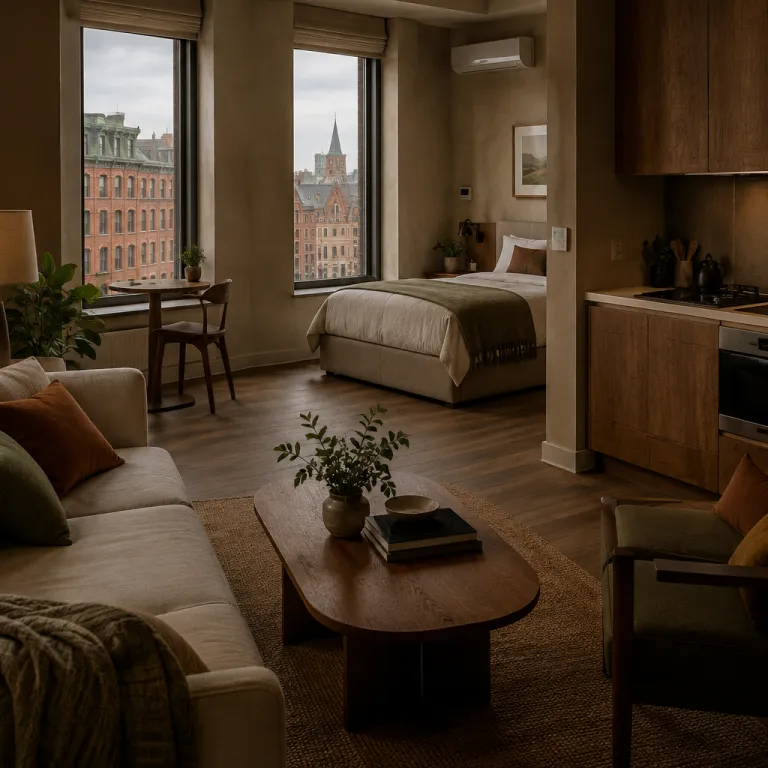
All-electric luxury in Boston: what changes for the guest
The phrase “all electric hotel Boston Atlas LEED” can sound abstract until you step into the Atlas Hotel in Allston and feel how quietly the building works around you. Opened in 2023 with LEED Gold certification and a Fitwel two-star rating, this 280-room property runs on a fully electric infrastructure where the engineering, from variable-refrigerant-flow heat pumps to demand-controlled ventilation, is designed to support Boston’s carbon-neutral ambitions while still delivering polished hospitality. For a business leisure traveler, the question is simple yet demanding: does this level of sustainable ambition enhance your stay, or merely decorate the article on the hotel website.
At this urban laboratory of innovation, the answer plays out in the guest rooms and public spaces rather than in slogans. Because the hotel relies on high-efficiency electric heat pump systems instead of fossil fuel boilers, temperature control is more precise, air quality feels cleaner, and the acoustic profile in each room is noticeably calmer. A recent internal energy study, summarized in the hotel’s 2024 sustainability report, estimates a 25–30% reduction in operational energy use compared with a conventional Boston hotel of similar size, and you sense that eco friendly intent in the way the design handles light, insulation and air, not in a lecture about carbon or a card asking you to reuse towels.
The Fitwel certification focuses on wellbeing, so the all electric hotel Boston Atlas LEED story is as much about how you sleep and work as how the grid is powered. Circulation routes are intuitive, staircases are inviting rather than hidden, and public spaces are planned to encourage social interaction without sacrificing privacy. As the general manager puts it, “If guests only notice that they slept well and felt focused in meetings, we’ve done our job.” For travelers who care about sustainable choices but refuse to compromise on comfort, this Allston hotel shows that carbon neutral thinking can sit comfortably beside a strong bar program and a polished front office team.
From linen cards to kilowatts: why energy strategy is the real differentiator
Luxury hotels in Boston have been talking about being sustainable for years, usually through the language of linen reuse and locally sourced menus. The all electric hotel Boston Atlas LEED approach shifts the focus from symbolic gestures to the hard engineering of carbon, with the Atlas Hotel committing to an all-electric backbone that aligns with the city’s long term climate strategy. Boston’s Climate Action Plan targets citywide carbon neutrality by 2050, and when you compare this to other properties cleaning up their own carbon footprint around the harbor, the Atlas offers a more structural answer to responsible hospitality, similar in ambition to the projects highlighted in this guide to hotels reducing emissions in Boston.
For a guest, that energy strategy shows up in quiet ways during meetings, meals and downtime rather than in a single dramatic moment. Meeting spaces and event space are lit with efficient LED systems that avoid the harsh glare you still find in older conference centers, while the building’s electric infrastructure supports stable temperatures during long business school style workshops. When you host events or a private meeting here, you are effectively buying into Boston’s carbon neutral trajectory without having to manage the technicalities yourself, from grid emissions factors to peak demand charges.
The rainwater harvesting, green infrastructure and bird safe window treatments at this address are not decorative extras; they are part of a design language that treats the building as a living system. That means the all electric hotel Boston Atlas LEED model reduces operational carbon while protecting the local ecosystem, from migratory birds over the Charles to stormwater flows around the enterprise campus. For the executive extending a trip into leisure, this level of eco friendly innovation offers a more credible story than a generic sustainability article in the lobby.
Allston’s enterprise campus: a different Boston base for business leisure
Set at the entrance to Harvard’s Enterprise Campus in Allston, the Atlas Hotel gives Boston a new kind of luxury address, one that feels closer to a research lab than a traditional city center grand dame. You are not on the Freedom Trail here; instead, you are sharing pavements with Harvard Business School students, researchers from Harvard University and start up teams moving between meetings in glass fronted spaces. For business travelers used to Back Bay or the Seaport, this shift in center of gravity changes how you experience both work and leisure.
The surrounding enterprise campus is anchored by names that matter in this part of Boston, from the Harvard stadium a short walk away to the David Rubenstein Treehouse style academic buildings that frame the skyline. While the actual Rubenstein Treehouse sits within the Harvard Business School campus, the reference point is clear; this is a neighborhood where architecture, innovation and education intersect in visible ways. Staying at this hotel in Allston means your morning run might pass the stadium while your afternoon meeting takes place in a space private enough for board level conversations.
For guests balancing law hospitality events, board retreats and social commitments, the location makes it easy to move between formal and informal spaces. You can host a private meeting with colleagues from Pearl Law or another firm, then step into more relaxed public spaces for a drink with Harvard business contacts before heading across the river for dinner. Travel time to Back Bay is typically 15–20 minutes by car outside peak hours, and if you are planning a longer stay, it is worth reading this perspective on what responsible luxury looks like in Boston, then using the all electric hotel Boston Atlas LEED model as your practical base.
Inside the Atlas: rooms, meetings and social spaces built around wellbeing
Step inside the Atlas Hotel and the first impression is not a lecture about carbon but a calm, contemporary design language that feels aligned with its all-electric backbone. Guest rooms are tailored for the business leisure traveler, with generous desks, strong lighting control and enough space to work without turning the bed into an office. The palette is restrained, allowing the eco friendly materials and thoughtful textures to speak quietly rather than shouting about sustainability.
Meeting rooms and event spaces are where the all electric hotel Boston Atlas LEED credentials intersect most clearly with day to day hospitality. Each meeting space is wired for hybrid events, yet the acoustics and lighting are tuned for human comfort first, so a long law hospitality seminar or a Harvard business style case discussion feels less draining. A typical floor offers a mix of boardrooms and flexible rooms that can host everything from investor briefings to alumni gatherings, and when you book these spaces for events, you are not just renting square meters; you are buying into a building whose carbon neutral ambitions support better air, better light and better focus.
Social spaces are equally considered, from the lobby bar to the more intimate corners designed for a space private enough to debrief after a high stakes meeting. Public spaces flow into semi private zones, allowing you to shift from a quick coffee with a colleague to a more confidential conversation without leaving the hotel. Across these guest rooms, meetings and social areas, this corner of Boston hospitality proves that sustainable design can be both subtle and deeply functional.
What carbon-neutral comfort does not solve – and how to book smart
Even at a flagship like this all electric hotel Boston Atlas LEED property, a green building does not erase every impact of travel. Your flights, ground transfers and dining choices still shape your overall carbon footprint, no matter how carbon neutral the hotel’s operations aim to be. What the Atlas offers is a credible way to reduce the accommodation slice of that footprint while maintaining the level of hospitality you expect from a serious Boston address.
There are also trade offs to consider when choosing this Allston base over a more central hotel in Back Bay or downtown Boston. You gain proximity to Harvard University, the enterprise campus and the Harvard stadium, plus easier access to innovation hubs and social events tied to the business school, but you are further from some traditional tourist icons. For many business leisure travelers, that is a fair exchange; the neighborhood feels more like a working campus than a postcard, and the hotel experience reflects that.
When you plan a stay, look beyond the marketing article and focus on how the property’s sustainable strategy aligns with your own habits and budget. Use tools like the Boston night cost index on Stay in Boston to benchmark rates, then weigh the value of all-electric operations, LEED Gold hospitality and Fitwel backed wellbeing against other options. In a city where more hotels are talking about being eco friendly, the Atlas offers a rare combination of design, carbon aware engineering and serious meeting spaces that genuinely change how a night in Boston feels from the inside.
FAQ
What does it mean for a Boston hotel to be all electric and LEED certified ?
An all-electric Boston hotel runs its core systems, such as heating, cooling and cooking, on electricity rather than fossil fuels, which allows it to align more easily with a low carbon grid. LEED certification is an independent standard that evaluates how sustainable the building is across energy, water, materials and indoor environmental quality. When you see an all electric hotel Boston Atlas LEED style combination, it signals both an engineering choice and a verified sustainability framework.
How does staying in a carbon-neutral focused hotel affect my comfort ?
In practice, a carbon neutral oriented property like the Atlas Hotel tends to offer more stable temperatures, better air quality and quieter rooms because of its modern electric systems and insulation. Fitwel and similar wellbeing standards also push hotels to design healthier staircases, circulation routes and public spaces, which can make your day feel less tiring. You experience the benefits as comfort and calm rather than as overt sustainability messaging.
Is the Atlas Hotel in Allston convenient for both business and leisure stays ?
The Atlas Hotel sits at the entrance to Harvard’s Enterprise Campus in Allston, close to Harvard Business School, Harvard stadium and several research and innovation hubs. That makes it particularly convenient for meetings, conferences and events linked to Harvard University or nearby companies, while still offering easy access to central Boston by car or public transport. For leisure time, you can explore the riverfront, campus architecture and emerging dining scene before heading into more traditional tourist areas.
Can I host private meetings and events at an all-electric hotel like the Atlas ?
Yes, the Atlas offers a range of meeting rooms, event spaces and more intimate areas suitable for a space private enough to host board sessions or client negotiations. These spaces are designed with modern audiovisual infrastructure, comfortable seating and lighting that supports long sessions without fatigue. Choosing an all electric hotel Boston Atlas LEED style venue also means your events align with Boston’s broader carbon neutral goals.
Does choosing an eco friendly hotel significantly reduce my overall travel footprint ?
Accommodation is only one part of your travel footprint, but staying in an eco friendly, all-electric and LEED certified hotel can meaningfully reduce the emissions associated with your nights in Boston. The impact is greatest when you combine that choice with lower carbon transport options, thoughtful dining and efficient trip planning. For frequent business travelers, consistently choosing properties with strong sustainability credentials can add up to a substantial long term reduction in emissions.